
열 전달과 기계 구조가 핵심인 LED 및 전력 보드 경로. 검증된 공정 범위: Material family: Metal core: BOYU; Rigid thickness: 0.3–8.0 mm; Routing: Routing · punching · V-cut · beveling 검토용 파일: Gerber 또는 ODB++, 드릴 파일, 스택업, 제작 도면, 수량 및 목표 일정. 게시된 한계는 JETFGO의 현재 공정 능력표를 기반으로 하며 최종 가능성은 전체 자료 검토 후 확정됩니다.
게시된 한계는 JETFGO의 현재 공정 능력표를 기반으로 하며 최종 가능성은 전체 자료 검토 후 확정됩니다.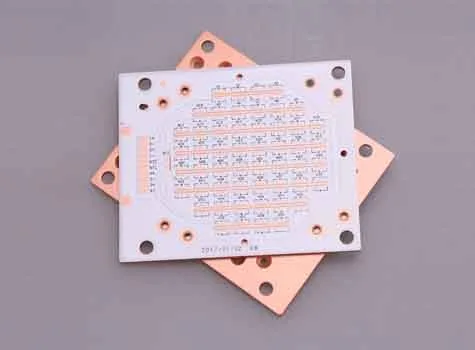
JETFGO / MCPCB-ALMETAL-CORE
01 / 엔지니어링 답변
엔지니어링 답변
02 / DATA
검증된 공정 범위
열 전달과 기계 구조가 핵심인 LED 및 전력 보드 경로.
Aluminum-Core Material
BOYU aluminum-base laminate
PCB Thickness Range
0.3–8.0 mm
Profiling Options
Routing · punching · V-cut · beveling
Thermal-Path Review
Aluminum core · dielectric layer · copper · LED heat path
LED Application Review
Thermal pads · component heat zones · mounting · board outline
Engineering Review
Material · dielectric · thickness · thermal · mechanical requirements
05 / INPUT
검토용 파일
Aluminum PCB Engineering Package
Gerber or ODB++, drill files, proposed stack-up, fabrication drawing, quantity, target delivery date and any aluminum-core, thermal, dielectric or mechanical requirements.
Thermal Requirements
Provide heat-source locations, thermal-management requirements and any specified dielectric thermal performance or aluminum-core material requirements.
Material & Stack-up Requirements
Provide aluminum-core material, board thickness, copper requirements, dielectric structure and any approved material or construction restrictions.
Mechanical & Profiling Requirements
Provide final board outline, mounting holes and any routing, punching, V-cut, beveling or mechanical tolerance requirements.
LED Assembly Requirements
견적 요청Identify LED locations, thermal-pad areas, component mounting interfaces and any assembly constraints that may affect heat transfer or board construction.
06 / FAQ
기술 질문
게시된 한계는 JETFGO의 현재 공정 능력표를 기반으로 하며 최종 가능성은 전체 자료 검토 후 확정됩니다.
01What is an aluminum-core LED PCB?+
An aluminum-core LED PCB is a metal-base circuit board that uses an aluminum base, dielectric layer and copper circuitry to transfer heat away from LEDs and other heat-generating components more efficiently than a conventional PCB construction.
02Which files help JETFGO review an aluminum-core LED PCB fastest?+
Send Gerber or ODB++, drill files, proposed stack-up, fabrication drawing, quantity, target delivery date and any aluminum-core, thermal, dielectric, copper or mechanical requirements.
03Can JETFGO support prototypes and repeat production for aluminum LED PCBs?+
Yes. Once the aluminum-core material, dielectric structure, copper requirements, thickness and mechanical construction are confirmed, the approved engineering record can support prototype validation and repeat production.
04Why is aluminum used for LED PCBs?+
Aluminum provides a metal base that helps transfer heat away from LEDs through the dielectric and copper structure into the surrounding thermal assembly. This makes it useful for lighting and other heat-intensive electronics.
05What is the difference between an aluminum PCB and an FR-4 PCB?+
An aluminum PCB includes a metal base designed to support heat transfer, while a conventional FR-4 PCB uses a fiberglass-reinforced laminate structure. Material selection depends on thermal, electrical, mechanical and cost requirements.
06Does the aluminum core alone determine LED PCB thermal performance?+
No. Thermal performance also depends on the dielectric layer, copper structure, component thermal pads, board thickness, heat-source layout and the thermal connection between the PCB and final assembly.
07Which profiling methods are available for aluminum-core PCBs?+
JETFGO can review aluminum-core PCB projects requiring routing, punching, V-cut or beveling. Final profiling method depends on board thickness, outline, panel structure and mechanical requirements.
08Can aluminum-core PCBs be used for high-power LEDs?+
Yes, aluminum-core PCBs are commonly evaluated for high-power LED applications where heat transfer is a major design requirement. Final suitability depends on LED power, dielectric performance, copper design, board structure and the complete thermal path.
RFQ / DFM
요구사항을 보내고 실행 가능한 공급 계획을 받으세요.
Gerber 또는 ODB++, 적층, 재료, 수량, 목표 일정과 검사 요구를 보내주시면 기술 검토 후 견적합니다.
기술 검토소재·스택업정밀 제조